Last updated October 15, 2026
ADU Permits, Codes & Inspections in CA: What You Need to Know
California’s ADU permit reforms since 2020 were written to cut red tape, but a Woodland Hills homeowner does not file with Sacramento. They file with whichever local agency actually processes the address, and in this part of Los Angeles that could be LA City Building and Safety, LA County, or a fire authority overlay. Most online guides collapse those distinctions into something falsely simple. Our complete guide to ADU in Woodland Hills does not. You will learn the real permit path, what “deemed complete” legally means, the three inspections that decide whether your ADU is legal or a liability, and how a fully permitted unit changes your title when you sell.
Quick Answer
California law allows ADUs on nearly all residential lots, but the permit process depends on which agency governs your address. In Woodland Hills, that is usually LA City Building and Safety, though some parcels fall under LA County or carry a Very High Fire Hazard Severity Zone overlay that adds requirements. Expect plan check, roughly 60 days for a complete application, three mandatory inspections, and total permit fees that commonly land between $4,000 and $12,000 depending on scope, school and utility fees, and whether the ADU is attached, detached, or a garage conversion.
Table of Contents
- Which Agency Governs Your Woodland Hills ADU
- What “Deemed Complete” Means Under AB 2221
- California Health & Safety Code Section 65852.2 in Plain Language
- Fire Hazard Zones and What They Add to a Woodland Hills Permit
- The Three Inspections Every California ADU Must Pass
- Real Permit Costs for a Woodland Hills ADU
- The Permit Record as Warranty and Resale Document
- Common Mistakes to Avoid
Which Agency Governs Your Woodland Hills ADU
Woodland Hills sits mostly inside the City of Los Angeles, which means LA City Building and Safety (LADBS) processes most ADU permits here. But the neighborhood’s edges blur, and some addresses fall under Los Angeles County’s Department of Regional Planning (DRP) and County Building and Safety. The difference matters more than most people expect.
LADBS operates through its own online permit portal and plan check system. Applications move through a review cycle, and inspectors work from district offices. The County DRP path involves a different application form, different fee schedule, and sometimes a different interpretation of state ADU law. A homeowner who assumes one process and gets the other loses weeks before they even start plan check.
The quickest way to determine your governing agency is to enter your address on the Los Angeles County Assessor portal and check the jurisdictional field. If it says City of Los Angeles, you file with LADBS. If it shows an unincorporated area, you file with the County. Some Woodland Hills addresses near Topanga or in the hills above Ventura Boulevard carry additional overlays that affect the permit path even when LADBS is the primary agency.
For most Woodland Hills homeowners, the practical sequence looks like this:
- Confirm jurisdiction through the Assessor portal or a call to LADBS.
- Request a property information report showing zoning, existing structures, and any fire hazard overlay.
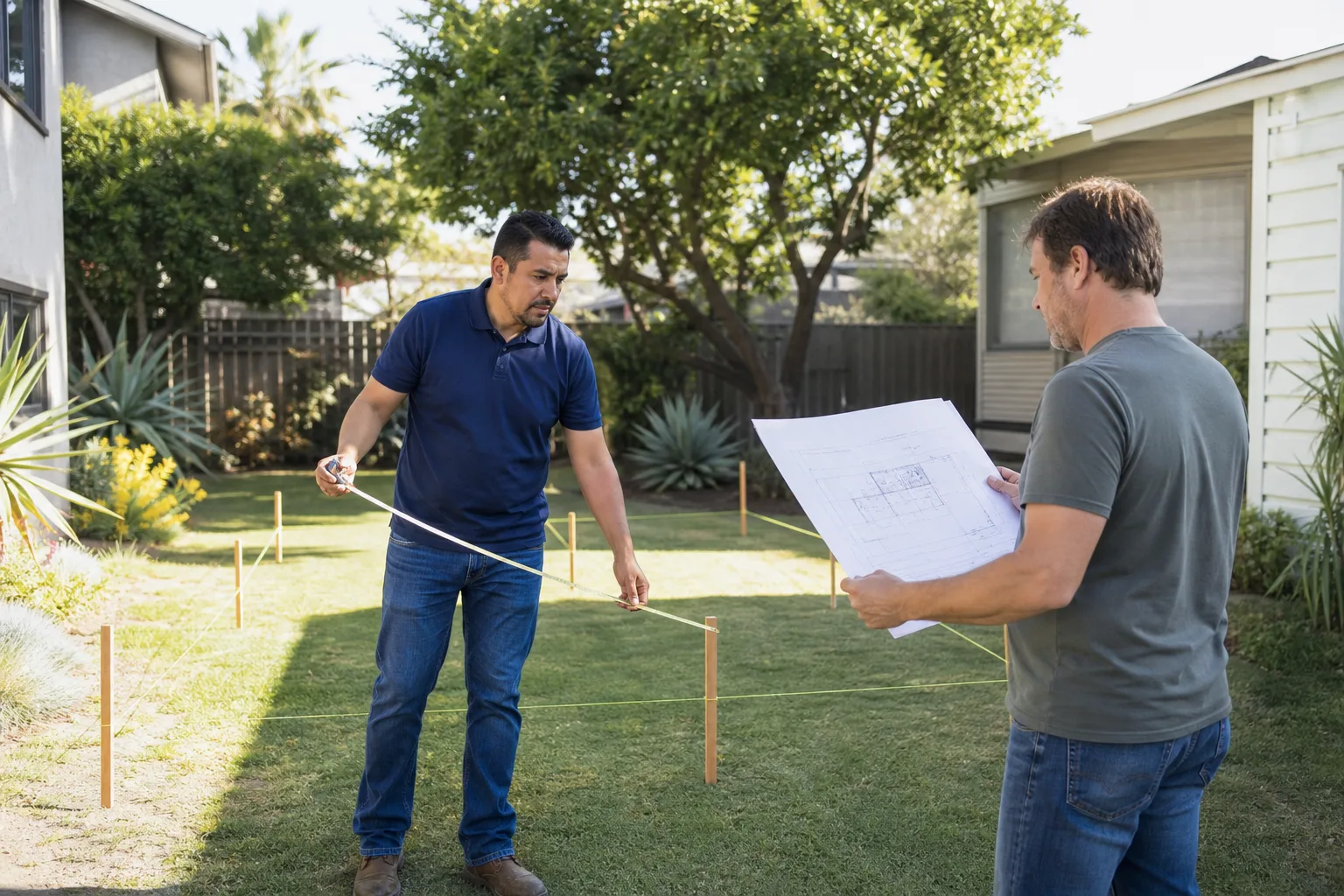
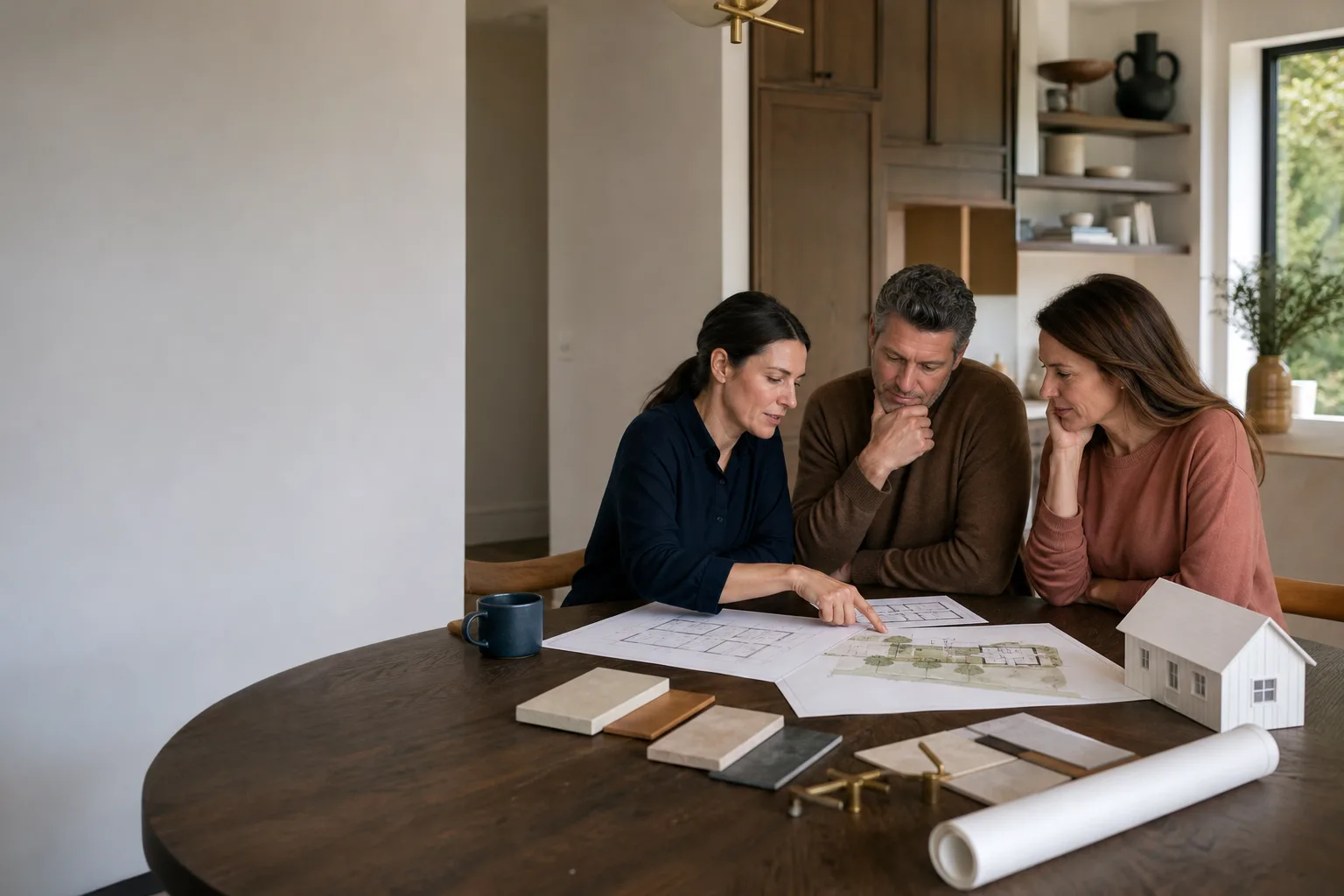
- Prepare site plan, floor plan, structural drawings, and energy compliance documents.
- Submit through the correct portal and pay plan check fees.
- Respond to plan check comments, obtain corrections, and get the permit issued.
- Build, pass the three inspections, and receive a Certificate of Occupancy.
We have built ADUs through both pipelines. The LADBS path is more digitized. The County path requires more patience. Neither is friendly to someone doing it for the first time without a set of plans that were prepared by someone who has read the current code. Our ADU Builders in Woodland Hills page explains how we navigate both paths so the permit does not become the project’s bottleneck.
What “Deemed Complete” Means Under AB 2221
AB 2221 says a local agency must approve or deny a complete ADU permit application within 60 days. That sounds like a deadline until you learn what “complete” means in practice. The 60-day clock starts only after the agency determines the application is complete. If any required document is missing, the application is incomplete, the clock resets, and the city is legally obligated to tell you why, but not to hold your hand while you fix it.
The most common incompleteness triggers we see on Woodland Hills ADU applications are the same ones most guides ignore, including those covered in our ADU Warning Signs: A Woodland Hills Homeowner’s Reference Guide:
- Site plans lacking the required scale, north arrow, and property line dimensions.
- Missing or outdated Title 24 energy compliance forms (CALGreen and Energy Code).
- Structural drawings that do not specify foundation, shear wall, and roof framing details.
- No verification of existing septic system capacity when the lot is not connected to municipal sewer.
- Missing parking replacement plan when converting a garage in zones that still enforce parking.
- No confirmation of fire sprinkler requirement applicability for the specific parcel.
So “deemed complete” is a legal status, not a procedural nicety. Agencies use it to manage their own workload. Homeowners who do not know what the agency considers complete burn 30 to 45 days before the 60-day window ever begins. We tell clients to treat the submittal as the project’s first inspection: you only get one clean run at it if you have assembled everything the reviewer expects to see the first time.
California Health & Safety Code Section 65852.2 in Plain Language
Health and Safety Code Section 65852.2 is the state statute that forces local governments to permit ADUs. It is not a design guide. It is a set of limits on what agencies can and cannot require. Understanding those limits is what turns a denied application into an approved one.
The statute, in the plainest possible terms, says this:
- A local agency must allow at least one ADU on any single-family lot zoned for residential use.
- ADUs may be detached, attached, or created by converting existing space such as a garage.
- The agency cannot require new utility connections if existing service is adequate, and cannot charge impact fees for an ADU under 750 square feet proportionate to a full single-family dwelling.
- Sprinklers may only be required if the primary dwelling already has them or if state fire code independently requires them for the specific structure.
- Owner occupancy requirements are prohibited until January 1, 2025, after which local agencies may impose limited owner-occupancy rules only on newly permitted ADUs.
- Agencies may still require compliance with building code, fire code, and health and safety standards.
What the statute does not do is eliminate local discretion on setbacks, height, lot coverage, or design review, though it limits each. The practical takeaway for a Woodland Hills homeowner is that most of the denials we see are not denials of the ADU itself. They are requests for corrections dressed up as denials. The remedy is usually a revised plan, a setback variance, or a structural detail, not a legal battle. If you are building a conventional addition instead of a backyard unit, our Room Addition Contractor in Woodland Hills page covers the different code path that applies to attached square footage additions.
Fire Hazard Zones and What They Add to a Woodland Hills Permit
Large sections of Woodland Hills inside the hills and canyons near Topanga State Park fall within a Very High Fire Hazard Severity Zone, usually shortened to VHFHSZ. That designation changes an ADU permit in specific ways that flat-land guides never discuss.
A VHFHSZ overlay means the fire authority has a review role. You may need defensible space documentation, ignition-resistant construction details, or additional egress clearance. Some parcels require a vegetation management plan recorded before the final inspection clears. Others require a fire department access review if the ADU increases occupancy in a canyon with a single access road.
We have seen Woodland Hills applications flagged as incomplete for missing the VHFHSZ checklist even when the building plans themselves were clean. The incompleteness is not a rejection of your project. It is the system telling you the fire overlay is part of the permit record, and the record is incomplete without it.
For garage conversions in the flatlands south of Ventura Boulevard, the fire overlay is usually not the binding constraint. For a new detached unit in the hills above Mulholland, it often is. Our Garage Conversion Contractor in Woodland Hills page explains how we handle the parking, structural, and fire code items that govern conversions specifically.
The Three Inspections Every California ADU Must Pass
Building departments may call them different things, but in substance every permitted California ADU goes through three inspections before a Certificate of Occupancy is issued. Each one tests different work, and each one is scheduled only after the prior one passes. A missed inspection stops the job and resets the schedule.
Inspection One: Foundation and Underground Work. The inspector comes before concrete is poured or after excavation but before cover. They check footing depth and width, rebar placement, hold-down and anchor bolt locations, and underslab plumbing or electrical conduits. On a slab-on-grade ADU, this is the only moment anyone can see what is under the floor. If it is not inspected before the pour, the city can require destructive testing later, which no one wants to pay for.
Inspection Two: Framing, Rough Electrical, Plumbing, and Mechanical. This happens after the structure is framed but before insulation and drywall go on. The inspector checks shear wall nailing patterns, hold-down hardware, header sizing, roof framing connections, and the complete rough-in for electrical, plumbing, and HVAC. This is the inspection that catches the largest number of corrections in our experience. It is also the one that separates a permitted build from a handshake build, because everything the inspector checks here gets sealed behind drywall and is invisible from that point forward. This is why our DIY vs Professional ADU guide warns against cutting corners at this stage.
Inspection Three: Final Building and Occupancy. This happens after all finish work is complete. The inspector verifies smoke and carbon monoxide detectors, egress windows, stair geometry, handrails, door hardware, GFCI outlets, water heater installation, and the overall condition of the unit against the approved plans. If it passes, the Certificate of Occupancy is issued. That certificate is the document that converts a structure from “under construction” into legally habitable space.
Missing any of these, or building without a permit and then trying to retroactively legalize the work, is how homeowners end up with an unpermitted ADU that cannot be insured or financed as living space. The permit record, which we cover below, is the only proof that the three inspections happened.
Real Permit Costs for a Woodland Hills ADU
Permit fees are the number every homeowner asks about first and the number most guides avoid putting in writing. Here are working ranges based on what we see in Woodland Hills for a standard one-bedroom ADU, roughly 400 to 750 square feet.
| Fee Category | Typical Range |
|---|---|
| Building permit and plan check (LADBS) | $2,500 to $5,500 |
| Electrical, plumbing, mechanical permits | $800 to $2,000 combined |
| School fees (if applicable by district) | $0 to $4,000 |
| Sewer and utility connection or capacity fees | $1,000 to $3,500 |
| Fire department review (VHFHSZ parcels) | $300 to $1,200 |
| Total typical range | $4,600 to $16,200 |
These are permit and agency fees only. They do not include design, structural engineering, or construction. Small ADUs under 750 square feet have statutory protection from impact fees proportionate to a single-family home, but school fees and utility connection charges still apply in many districts. The exact number for your address is knowable before you commit, and that goes in writing before any work starts.
The Permit Record as Warranty and Resale Document
Here is the part most guides never reach: a fully permitted ADU is not just a building that passed inspections. It is a legal record that follows the property for as long as the property exists.
When you sell a Woodland Hills home with a permitted ADU, the title report shows the unit, the square footage counts toward the home’s listed size, and lenders can underwrite the purchase price using the ADU as legal dwelling space. The permit record includes the Certificate of Occupancy, the final inspection cards, and the energy compliance documentation. That record is the evidence appraisers, lenders, and buyers’ inspectors rely on.
An unpermitted ADU works the other way. The square footage cannot legally be marketed as living space. Lenders may exclude it from the appraisal. Buyers ask for the permit record, find none, and either walk away or demand a price reduction equal to the cost of legalizing the space, which often means invasive inspections, opened walls, and fines. A garage conversion done without permits is the most common version of this in Woodland Hills: the work looks fine, the tile is straight, but the record does not exist.
This is why we keep the permit record as part of the project deliverable, not an afterthought. When a Fielding ADU is complete, the homeowner receives the permit card, inspection signatures, and the Certificate of Occupancy in one packet. Our Fielding ADU Woodland Hills home page explains what that deliverable looks like on a finished job.
Common Mistakes to Avoid
- Submitting before the application is actually complete. AB 2221’s 60-day clock means nothing if your submittal is missing a Title 24 document or a legible site plan. The review stops, you get a correction letter, and you lose weeks. Assemble everything the reviewer expects before you pay the plan check fee.
- Assuming LADBS handles your Woodland Hills address. Most Woodland Hills parcels do fall under LA City, but the edges do not. A five-minute jurisdiction check on the Assessor portal saves you from filing into the wrong system and starting over.
- Ignoring the VHFHSZ overlay in the hills. Fire authority requirements are not optional add-ons. A missing defensible space plan or ignition-resistant material spec can flag your application incomplete even when the building plans are clean.
- Converting a garage without addressing the parking code. State law relaxed parking requirements for ADUs near transit, but not all Woodland Hills lots qualify. If your lot still requires replacement parking, the permit dies at plan check unless the drawings show where it goes.
- Skipping the rough inspection because the framing “looks fine.” What is sealed behind drywall can only be checked once. A failed rough inspection is cheaper to fix than a failed final inspection, and an unpermitted rough means an unpermitted final.
- Treating the permit as a formality rather than the project’s legal spine. The permit is not a fee you pay. It is the document that makes the space legally inhabitable, financeable, and sellable. Losing it, or never getting it, costs more than the permit ever did.
When to Call a Professional
You should call a professional if your Woodland Hills parcel falls in a VHFHSZ, a hillside area, or any address where the jurisdictional check comes back ambiguous. You should also call if the permit application has been returned as incomplete more than once, or if the project involves structural work you do not want to guess on. Fielding ADU Woodland Hills offers free estimates in Woodland Hills, and we bring a written price before any work starts. Call (559) 254-0116 and a live person answers, whether you call at noon or midnight. We do not do voicemail.
Frequently Asked Questions
Plan check, building permit, and trade permits for a standard one-bedroom ADU in Woodland Hills commonly run $4,600 to $16,200 depending on size, jurisdiction, fire overlay, and school or utility fees. The exact number is knowable for your address before you commit. Call (559) 254-0116 and we will put the numbers in writing before any work starts.
A complete application must be approved or denied within 60 days under AB 2221, but if the application is deemed incomplete the clock resets, and real-world timelines in Los Angeles commonly run 3 to 6 months from submittal to issued permit. Much of that is plan check correction cycles, not review itself. Submitting a genuinely complete set the first time is what actually shortens the timeline.
Fire sprinklers are only required for an ADU if the primary dwelling already has them or if fire code independently requires them due to the parcel’s fire hazard zone. In Woodland Hills VHFHSZ areas, this comes up more often than in the flatlands, and the determination depends on the specific property, not a blanket rule.
You can physically do it, but the result is not legal living space. An unpermitted garage conversion cannot be counted as square footage at sale, cannot be financed as dwelling space, and must be legalized or reverted if the city becomes aware of it. The legal path is a permit, and a garage conversion contractor handles it from drawings through final inspection.
It should not, and on a Fielding ADU job it does not. The price goes in writing before any work starts, and the number you approve on day one is the number on the final invoice. If a change order is requested, it is priced and approved in writing before that work proceeds.
We pull them. Fielding ADU Woodland Hills handles the permit application, the plan check responses, the inspection scheduling, and the final Certificate of Occupancy, so the record is complete at the end. You should never be left holding an open permit.
The Bottom Line
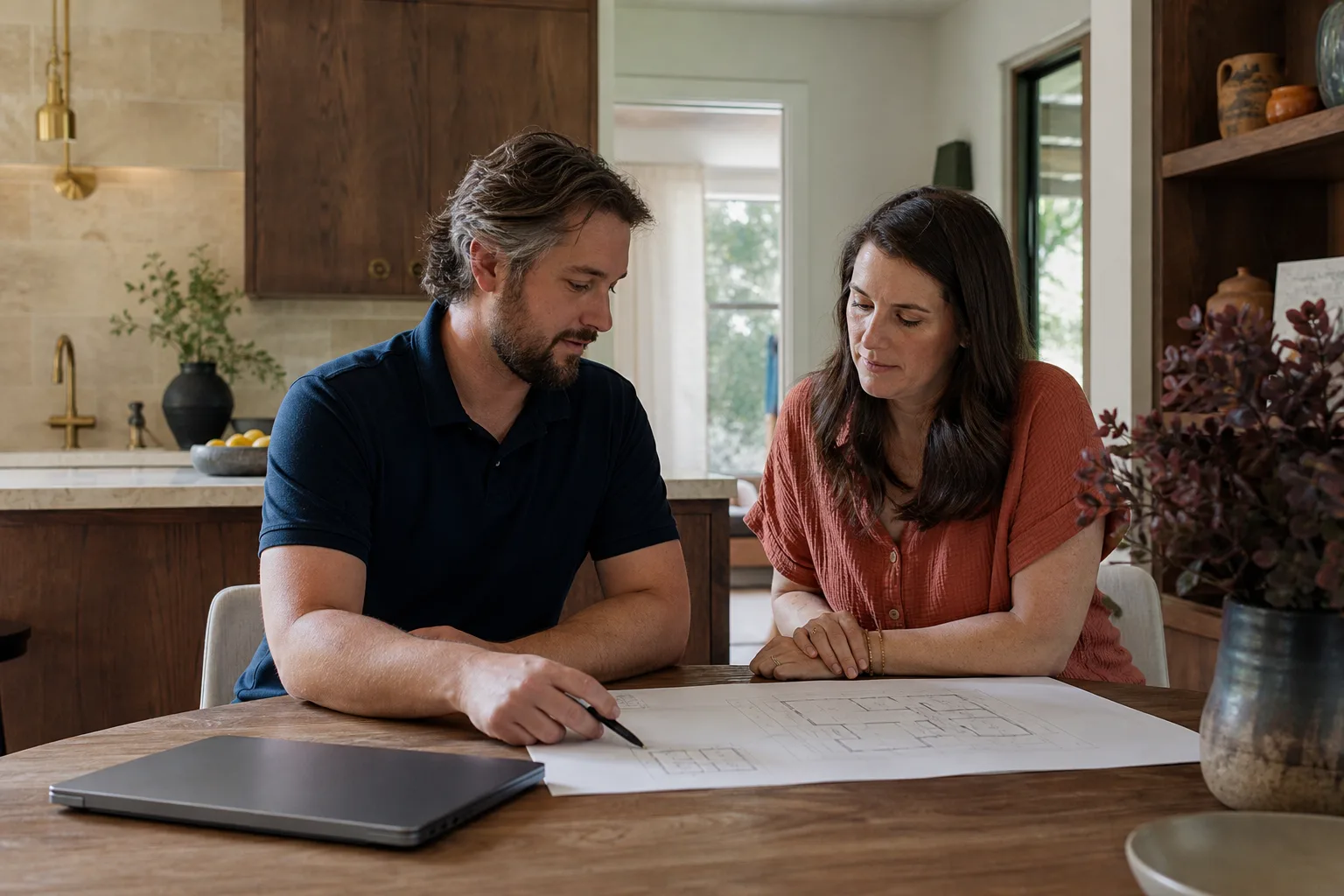
California made ADUs legally easier, but the Woodland Hills permit path still runs through local agencies with real requirements and real consequences for getting it wrong. Know your jurisdiction. Submit a complete application. Expect fire overlay requirements in the hills. Pass the three inspections and keep the record. The difference between a permitted ADU and an unpermitted one is the difference between equity and liability at sale. Fielding ADU Woodland Hills builds ADUs the way the code intends: permitted, inspected, and backed by The Garrison Standard in writing for a full year. For more guides & resources, visit our blog. If it fails inside that year, we come back and make it right at no charge.
Written by Reed Calloway, Owner at Fielding ADU Woodland Hills, serving Woodland Hills since 2006.