Last updated October 15, 2026
The Complete Guide to ADU in Woodland Hills
Woodland Hills sits inside two different fire hazard severity zones depending on which side of Ventura Boulevard your property falls. That single fact changes your ADU setbacks, your materials list, and your insurance picture before a contractor ever breaks ground. Most statewide ADU guides skip this entirely; for more guides & resources, see our blog. This guide walks through the actual hurdles you’ll face on a Woodland Hills lot: fire-zone material rules, LA City versus LA County jurisdiction, HOA limits that survive state law, hillside lot-coverage math, and what a real written price should include.
Quick Answer
Building an ADU in Woodland Hills typically costs between $180,000 and $420,000 depending on whether you convert a garage, build a prefab unit, or do a custom hillside build, and takes 9 to 18 months from design to occupancy. Your property’s fire hazard zone, governing jurisdiction (LA City for most of Woodland Hills), and lot slope will dictate the biggest cost variables. A written upfront price, not a cost-plus estimate, is the single biggest protection against budget overruns, as explained in our DIY vs Professional ADU: The Woodland Hills Homeowner’s Decision Guide.
Table of Contents
- How Woodland Hills Fire Zones Shape Your ADU
- LA City vs. LA County: Which Rules Govern Your Parcel
- What Your HOA Can and Cannot Block Under State Law
- Lot Coverage Math on Hillside Lots vs. Valley Floor Lots
- What a Woodland Hills ADU Actually Costs
- Written Upfront Price vs. Cost-Plus: The Difference in Writing
- Prefab, Modular, and Conventional Build Methods Compared
- Common Mistakes to Avoid
- When to Call a Professional
- Frequently Asked Questions
How Woodland Hills Fire Zones Shape Your ADU
Woodland Hills is split by the Very High Fire Hazard Severity Zone (VHFHSZ) designation. Much of the area south of Ventura Boulevard, climbing into the Santa Monica Mountains, falls inside the VHFHSZ. The flat Valley floor north of Ventura generally does not. This is not a technicality. It changes what you can build and what it will cost.
If your parcel is in the VHFHSZ, your ADU must meet Chapter 7A of the California Building Code. That means ember-resistant vents on the eaves and foundation, non-combustible or ignition-resistant siding, and tempered or multi-pane windows on the fire-facing elevations. A standard vinyl-sided structure that would pass on the Valley floor will not pass on a hillside lot south of the Boulevard. Fielding ADU Builders accounts for these requirements in the written price from day one, because we have built on both sides of the zone and know the difference shows up in the materials line, not later as a surprise change order.
The fire zone also affects your insurance application. Carriers writing policies in the VHFHSZ will ask about the roof class, venting, and defensible space before they quote. An ADU built to Chapter 7A will clear underwriting faster and at a better rate. Building the cheaper way and retrofitting later costs more than building it right the first time. We specify James Hardie fiber cement siding on most VHFHSZ projects for exactly this reason: it is a recognized non-combustible option that underwriters accept without argument.
Setbacks change too. In the VHFHSZ, the fire department can require additional clearance on the downhill side of a structure for defensible space. That means a hillside ADU may need to sit further from the property line than the standard 4-foot side and rear setback, even when the city’s zoning would allow less.
LA City vs. LA County: Which Rules Govern Your Parcel
Woodland Hills is a neighborhood inside the City of Los Angeles. Most parcels are governed by the City of Los Angeles Department of Building and Safety (LADBS), not LA County. But the edges get fuzzy. Some parcels along the western boundary near Calabasas or unincorporated pockets near Topanga may fall under LA County jurisdiction. Your property tax bill or a quick parcel lookup will tell you definitively, and it matters more than you would think.
LA City and LA County both must comply with state ADU law, AB 68 and SB 9 included. But their local ordinances differ in the details. LA City allows ADUs up to 1,200 square feet on most single-family lots, with a minimum 800 square feet regardless of lot coverage limits. LA County has its own tiered size limits based on lot size and the presence of an existing single-family home. Jurisdiction also determines which fire department reviews your plans: the Los Angeles Fire Department inside city limits, the LA County Fire Department outside them. Both enforce VHFHSZ requirements, but their interpretations of defensible space and access roads can vary by a full foot or more.
If you are within LA City limits, which most Woodland Hills addresses are, you are also subject to the city’s Small Lot Subdivision and density bonus rules, which occasionally come into play when an owner wants a second ADU or a junior ADU in addition to a primary ADU. The rule most homeowners miss: LA City caps the number of bedrooms in a detached ADU at two regardless of square footage, unless the ADU is part of a duplex conversion. We tell every Woodland Hills client on the first call to confirm jurisdiction before they even sketch a floor plan, following the steps in our How to Hire a ADU Contractor in Woodland Hills: A Step-by-Step Guide. A plan drawn for the wrong jurisdiction may need costly revisions.
What Your HOA Can and Cannot Block Under State Law
Woodland Hills has some of the oldest HOAs in the San Fernando Valley, with CC&Rs written in the 1960s and 1970s that flatly prohibit second dwelling units. State law has moved. AB 68 and SB 9 now prevent HOAs from enforcing any covenant that prohibits ADUs outright on single-family lots, with narrow exceptions for HOAs that predate 1940 or that are common-interest developments with shared walls. Most Woodland Hills HOAs do not qualify for the exemption.
What an HOA can still do: impose architectural review standards that apply equally to all structures in the community. That means they can require certain roof pitches, exterior paint palettes, or landscaping screens. They cannot impose standards that make the ADU effectively impossible to build, such as a rule that all structures must be attached when state law allows detached ADUs. They also cannot deny an ADU on the basis that it would be used as a rental. That restriction is unenforceable under California law.
In practice, we have seen Woodland Hills HOAs try to delay by asking for repeated plan resubmissions, or by requiring variances that the city does not require. The correct response is a polite letter quoting Government Code Section 65852.2 and Civil Code Section 4751, which our team is prepared to draft. Most HOA boards back down once they know the owner understands the statute. If your HOA has a pending ADU rule change, build it into your timeline: the city will issue the permit, but a hostile architectural review can add 60 to 90 days. We handle the HOA paperwork as part of the project because it is faster when one party manages both the city and the association.
Lot Coverage Math on Hillside Lots vs. Valley Floor Lots
State ADU law guarantees an 800-square-foot ADU regardless of the underlying lot coverage limit. That guarantee is the floor, but it is not the whole picture. On a flat Valley floor lot north of Ventura Boulevard, a typical 7,500-square-foot parcel with a 40-percent coverage limit can often accommodate a 1,000- to 1,200-square-foot ADU without a variance. The math works: the existing house covers 2,200 square feet, the garage covers 400, and the ADU brings you to roughly 3,600, still under the cap.
On a hillside lot south of the Boulevard, the same math falls apart. Hillside lots in Woodland Hills are frequently irregular, with steep grades that reduce the usable, flat portion of the parcel to a fraction of the recorded square footage. A 10,000-square-foot hillside lot may only have 3,000 square feet of buildable pad. The 800-square-foot minimum becomes harder to place, not easier. In some cases, the ADU needs a setback variance (the city’s written permission to build closer to the property line than the standard rule allows) or a foundation engineered for slope, which adds structural cost and extends the permit review.
Grading is the other silent cost. Cutting into a hillside to create a larger pad triggers a grading permit, a soils report, and possibly a retaining wall. On a flat Valley lot, none of that exists. A homeowner on a hillside should budget an additional $25,000 to $60,000 for grading and foundation work compared to an identical ADU on the flat side of Woodland Hills. It is not inflation; it is geology. We price hillside projects with a soils report assumption from the outset, because pretending the slope does not exist is how budgets break.
What a Woodland Hills ADU Actually Costs
Here are real numbers from our work in Woodland Hills. A garage conversion runs $120,000 to $180,000 when the existing slab and framing are sound and the structure already meets dimensional requirements. A prefab ADU from Abodu, Cover, or Boxabl typically lands between $200,000 and $300,000 including site work, foundation, and utility connections, depending on the model and the condition of your driveway access. A conventional stick-built ADU of 800 to 1,200 square feet runs $250,000 to $400,000, with the higher end reserved for hillside lots inside the VHFHSZ that require Chapter 7A materials and slope engineering.
Permit fees in LA City run roughly $8,000 to $15,000 for an ADU, depending on valuation, plus school impact fees that the city reduced under AB 68 but did not eliminate. Utility connections to LADWP can add $10,000 to $25,000 if the existing service panel needs an upgrade or the sewer lateral must be trenched across the lot. Plan preparation, structural engineering, and survey work add $15,000 to $30,000. None of these numbers should be a surprise if your contractor prices the job correctly before you sign.
The table below is what we include in every written estimate we hand a Woodland Hills homeowner:
- Garage conversion: $120,000 – $180,000
- Prefab ADU (Abodu, Cover, Boxabl): $200,000 – $300,000
- Conventional build, flat lot: $250,000 – $340,000
- Conventional build, hillside VHFHSZ: $300,000 – $420,000
- Permit and school fees: $8,000 – $15,000
- Utility connections and panel upgrade: $10,000 – $25,000
- Design, engineering, survey: $15,000 – $30,000
The difference between a $200,000 project and a $400,000 project on the same street is almost always fire-zone materials, slope work, and utility distance. Those are knowable before you spend a dollar on plans. A contractor who will not price them upfront is telling you something about how the rest of the job will go.
Written Upfront Price vs. Cost-Plus: The Difference in Writing
Most ADU estimates are cost-plus. That is the contracting term for “we will bill you for whatever it costs plus our markup.” The estimate exists to get you to sign, and the final invoice is a different number. In Woodland Hills, where fire-zone material upgrades and hillside grading can appear mid-project, cost-plus is how a $250,000 quote becomes a $390,000 invoice. You approved one number; the contract allows another.
Fielding ADU Builders prices differently. We are an independently owned member of the Garrison Partners family, which has built to The Garrison Standard since 2006. The standard is simple enough to put in writing: the price goes on paper before any work starts, and the number you approve is the number on the final invoice. If we miss a material allowance or a site condition, that is our error to absorb, not a change order to hand you. The Garrison Code governs how we operate: show up in the window, price in writing, by the book, leave it clean, stand behind it for a year. The 365-Day Done Right Promise backs every project in writing: if something fails inside one year due to our workmanship, we return and correct it at no charge, as detailed in our Room Addition Contractor Maintenance Checklist for Woodland Hills Homeowners.
A written upfront price should include line items for demolition, foundation, framing, roofing, siding, windows, electrical, plumbing, HVAC, drywall, finishes, flooring, fire-zone upgrades if applicable, permitting, engineering, and site cleanup. If a line item is marked “allowance” without a fixed dollar amount, ask for the fixed number. Allowances are how cost-plus hides inside a fixed-price contract.
Prefab, Modular, and Conventional Build Methods Compared
Woodland Hills homeowners research specific product names before they ever call a builder. That is a good instinct, because the build method changes the timeline, the price, and the finish quality. Our team works across the major platforms so we can recommend the right one for the lot, not the one we happen to sell.
Abodu and Cover are the two most common prefab choices we see in the San Fernando Valley. Both deliver a factory-built unit on a steel chassis or foundation system, and both can be permitted faster than a conventional build because the plans are pre-engineered and pre-approved in many jurisdictions. Abodu is pitched at backyard rental units and typically arrives in one or two sections; Cover emphasizes a more architectural panelized system with a cleaner interior finish. Delivery access in Woodland Hills matters more than the brochure suggests. Streets south of Ventura Boulevard can be narrow and winding, and a crane set over a hillside is a different job than a flat drop on a wide street. Boxabl, with its folding room design, is a newer option that can work in tighter access situations but has less of a track record with LA City building officials, which can slow plan review.
Dvele and Mighty Buildings represent the high-performance end of the market. Dvele builds whole-home modules with serious insulation and air-sealing; Mighty Buildings uses 3D-printed composite panels. Both carry a premium, and both are best suited to a homeowner who values energy performance and is willing to pay for it. Conventional stick-built construction with James Hardie siding remains the most flexible option for hillside lots, custom footprints, and fire-zone compliance. It costs more in labor than a factory build but adapts to the site, which prefab does not always do gracefully on a slope.
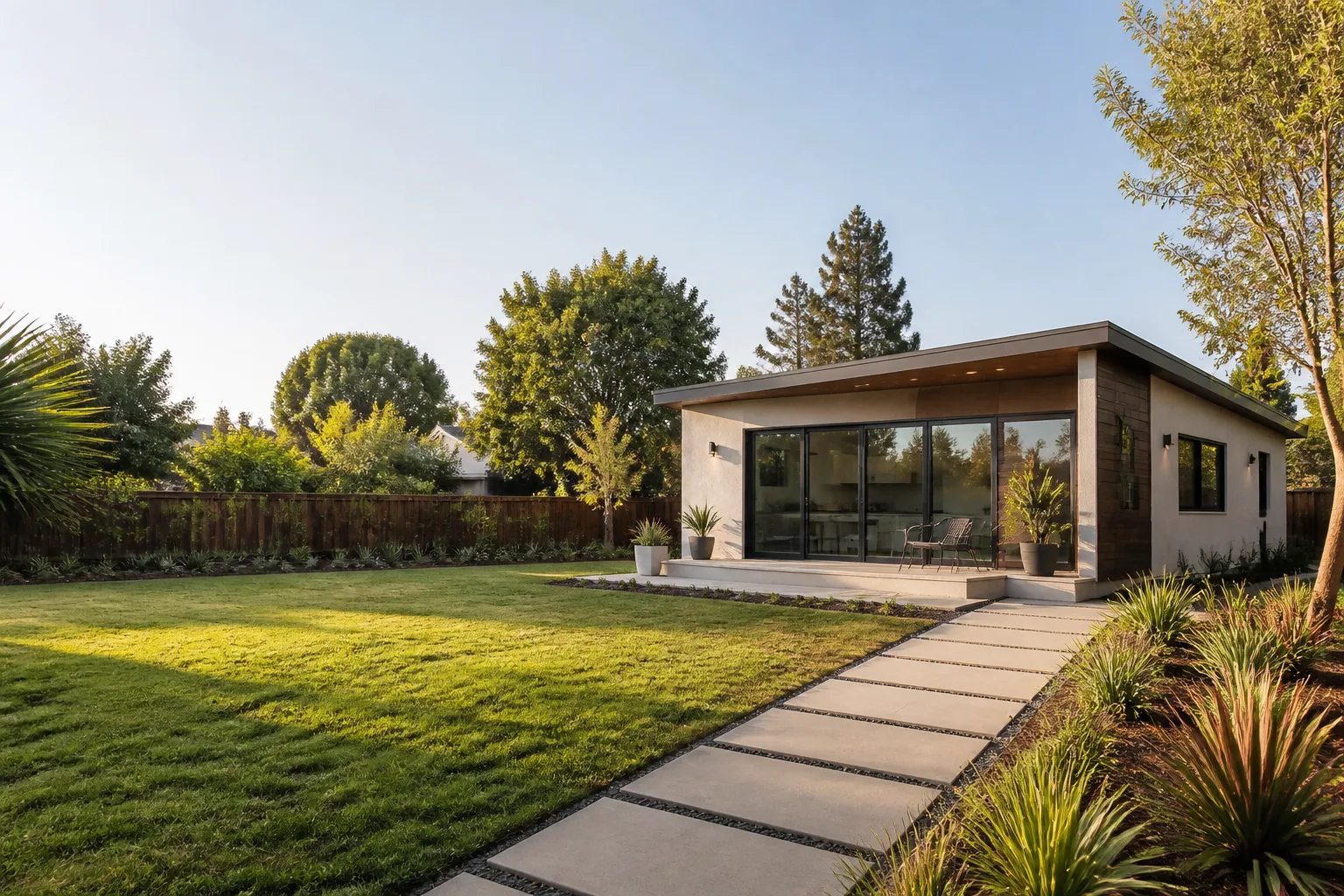
The right answer depends on your lot. A flat, wide driveway lot north of Ventura is a strong prefab candidate. A hillside lot with tight access and VHFHSZ requirements is usually a conventional build. We quote both paths on most projects so the decision is made on numbers, not on a sales pitch.
Common Mistakes to Avoid
- Not confirming your fire hazard zone before design. If you draw plans without Chapter 7A materials and your parcel is in the VHFHSZ south of Ventura, the plans get rejected at first submittal and you pay for a second design round.
- Assuming your HOA cannot stop you and ignoring their review process. State law protects your right to build, but a hostile architectural committee can delay you for months if you never engage them.
- Budgeting on a flat-lot number for a hillside property. Grading, retaining walls, and slope foundations routinely add $25,000 to $60,000. If the quote does not mention slope, it is not a real quote.
- Signing a cost-plus contract. You are approving one number and agreeing to pay another. Get the price in writing before work starts, with no open-ended allowances.
- Ignoring utility distance. The cost to trench a sewer lateral or upgrade a panel across a long Woodland Hills lot can exceed $25,000. Verify it before you commit.
- Skipping the HOA document review. Your CC&Rs may have architectural standards you need to meet, and you want those standards in hand before final plans are drawn, not after.
- Choosing the cheapest builder on referral without checking their ADU history. An ADU is not a room addition. It carries its own state law, its own permitting path, and its own inspection sequence. A builder who has never pulled an ADU permit in Woodland Hills will learn on your timeline.
When to Call a Professional
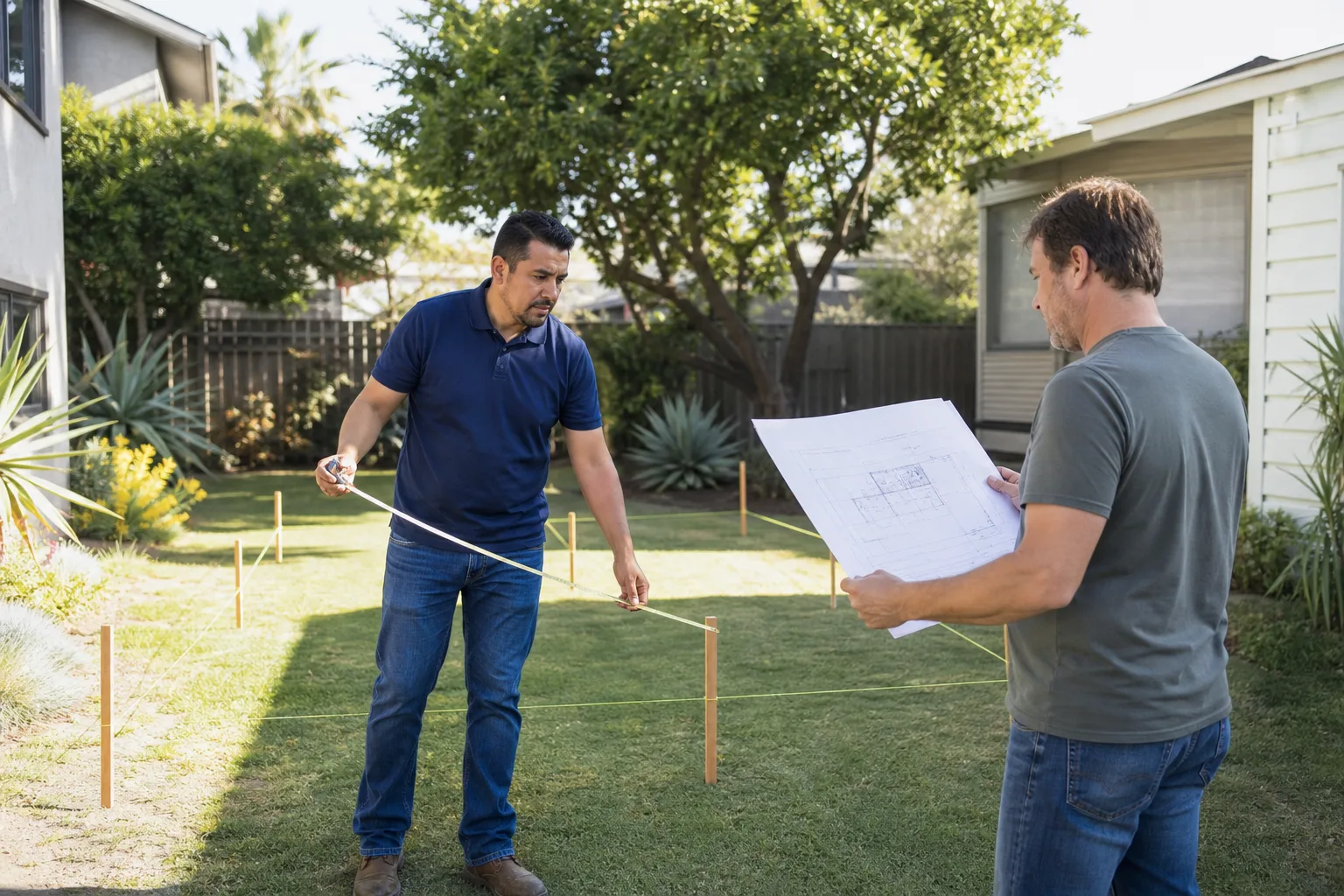
Call a professional when your property is on a slope, inside the VHFHSZ, governed by an HOA with restrictive CC&Rs, or when you have already received a vague estimate that will not put numbers on paper. Those four conditions cover the majority of Woodland Hills parcels. A builder who has worked both sides of Ventura Boulevard understands the difference between a flat-lot prefab and a hillside Chapter 7A build, and that understanding is worth more than the lowest bid. Fielding ADU Builders offers free estimates in Woodland Hills. Call (559) 254-0116 and a live person will answer, day or night. We will walk the lot, confirm the fire zone, check the jurisdiction, and give you a written price before any work starts. No voicemail. No callback queue. No cost-plus.
Frequently Asked Questions
An ADU in Woodland Hills costs $120,000 to $420,000 depending on build type and lot conditions. Garage conversions run $120,000 to $180,000, prefab units from Abodu or Cover run $200,000 to $300,000, and conventional builds run $250,000 to $420,000, with hillside VHFHSZ properties at the top of that range. Call (559) 254-0116 for an exact quote on your parcel. Estimates are free and in writing.
State law prohibits HOAs from banning ADUs outright on single-family residential lots, including most Woodland Hills HOAs. They can still enforce reasonable architectural standards, but they cannot make the ADU impossible to build. Call (559) 254-0116 and we will review your CC&Rs before you spend money on plans.
Most Woodland Hills parcels fall under the City of Los Angeles and its Department of Building and Safety. Some edge parcels may fall under LA County. The difference affects permitted ADU size, fire department plan review, and permit fees. Call (559) 254-0116 and we will confirm jurisdiction for your address at no charge.
With Fielding ADU Builders, no. The price goes in writing before any work starts, and the number you approve is the number on the final invoice. The Garrison Standard requires a written price and a written one-year guarantee on every project. Call (559) 254-0116 to get your written estimate.
Yes. We pull all building permits from LADBS or LA County, handle the fire department review if your property is in the VHFHSZ, and schedule every inspection through final sign-off. You will not be asked to pull your own permits. Call (559) 254-0116 to schedule a free estimate.
Most Woodland Hills ADUs take 9 to 18 months from design to occupancy. HOA review, fire-zone plan check, and hillside grading are the three variables that push projects to the longer end. A prefab unit on a flat lot can sometimes finish in under a year. Call (559) 254-0116 for a timeline specific to your property.
Helpful resources: Start with the Fielding ADU Woodland Hills home page to understand our approach, then see our dedicated ADU Builders in Woodland Hills page for build method details. If you are weighing a different use for the space, our Garage Conversion Contractor in Woodland Hills page covers that path, and the Room Addition Contractor in Woodland Hills page explains attached options.
The Bottom Line
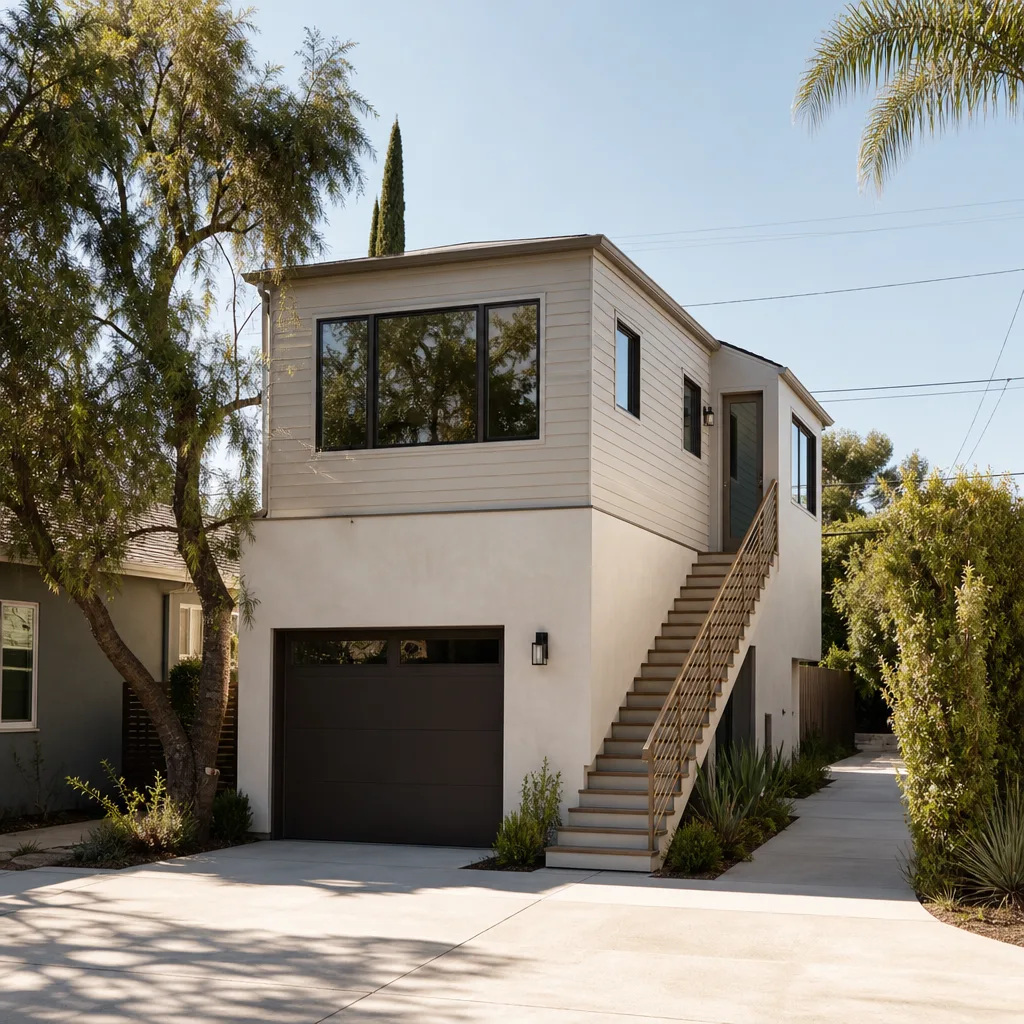
A Woodland Hills ADU is a specific project, not a generic California one. Fire-zone rules differ from one side of Ventura Boulevard to the other. Hillside lots carry grading and foundation costs that flat-lot numbers never include. HOA restrictions that look like dead ends are usually beatable under AB 68 and SB 9. And the single biggest financial risk is not the build itself; it is signing a cost-plus contract that lets the price float. A written upfront price, a builder who knows Woodland Hills jurisdiction, and a one-year written guarantee should be your baseline for every bid. If a contractor will not put those in writing, keep looking.
Written by Reed Calloway, Owner at Fielding ADU Woodland Hills, serving Woodland Hills since 2006.