Site Assessment in Woodland Hills, CA
A site assessment for an ADU in Woodland Hills typically costs $450 – $1,200 depending on lot slope, soil conditions, and access, and it’s the step that tells you whether your backyard can legally and physically support the unit you want to build. We complete most Woodland Hills site assessments within 7 – 10 business days, then hand you a written report that includes setback findings, soil notes, utility locations, and a realistic build recommendation. Call (559) 254-0116 to schedule yours, or keep reading to understand what the process actually covers.
Fielding ADU Woodland Hills runs site assessments as the front end of our ADU Design & Permitting in Woodland Hills work. We don’t treat it as a sales pitch. We treat it as the foundation for an honest price, because you can’t put a real number on an ADU until you know what the ground, the city, and the lot will allow. Reed Calloway has been running these assessments across the west San Fernando Valley long enough to know that two lots on the same Woodland Hills street can have entirely different build realities.

When You Need Site Assessment
A site assessment is the right first step in most of these situations:
- You’re considering a detached ADU but your backyard slopes or has drainage issues. Woodland Hills lots north of Ventura Boulevard frequently climb into the foothills, and grade change is the single biggest cost variable for a foundation.
- You want a garage conversion and need to confirm the existing slab and walls meet current code. Many 1950s and 1960s Woodland Hills garages were built with unreinforced slabs that won’t pass today’s structural requirements without retrofit work.
- The city flagged a setback question on your property. If your lot is shallow or oddly shaped, you may need a setback variance (the city’s written permission to build closer to the property line than the standard rule allows) and you’ll want to know that before you pay for full design drawings.
- You’ve gotten wildly different quotes from contractors and need a neutral read on what your site actually requires. When one bid assumes a standard foundation and another assumes pier-and-grade-beam, the difference usually traces back to site conditions nobody verified.
- You own a hillside or canyon-adjacent property where soil stability is a real question. Areas near Serrania Avenue and the Upper Las Virgenes watershed have known expansive-soil pockets, and a proper assessment flags them before they become a $30,000 surprise.
- You’re comparing prefab and stick-built options and need to know what your lot can actually accept. Modular units from Abodu or Cover have specific foundation, access, and utility requirements that differ from a conventional build, and the assessment tells you which path is viable without guesswork.
Our Site Assessment Process
Here’s how a Fielding ADU Woodland Hills site assessment runs, step by step:
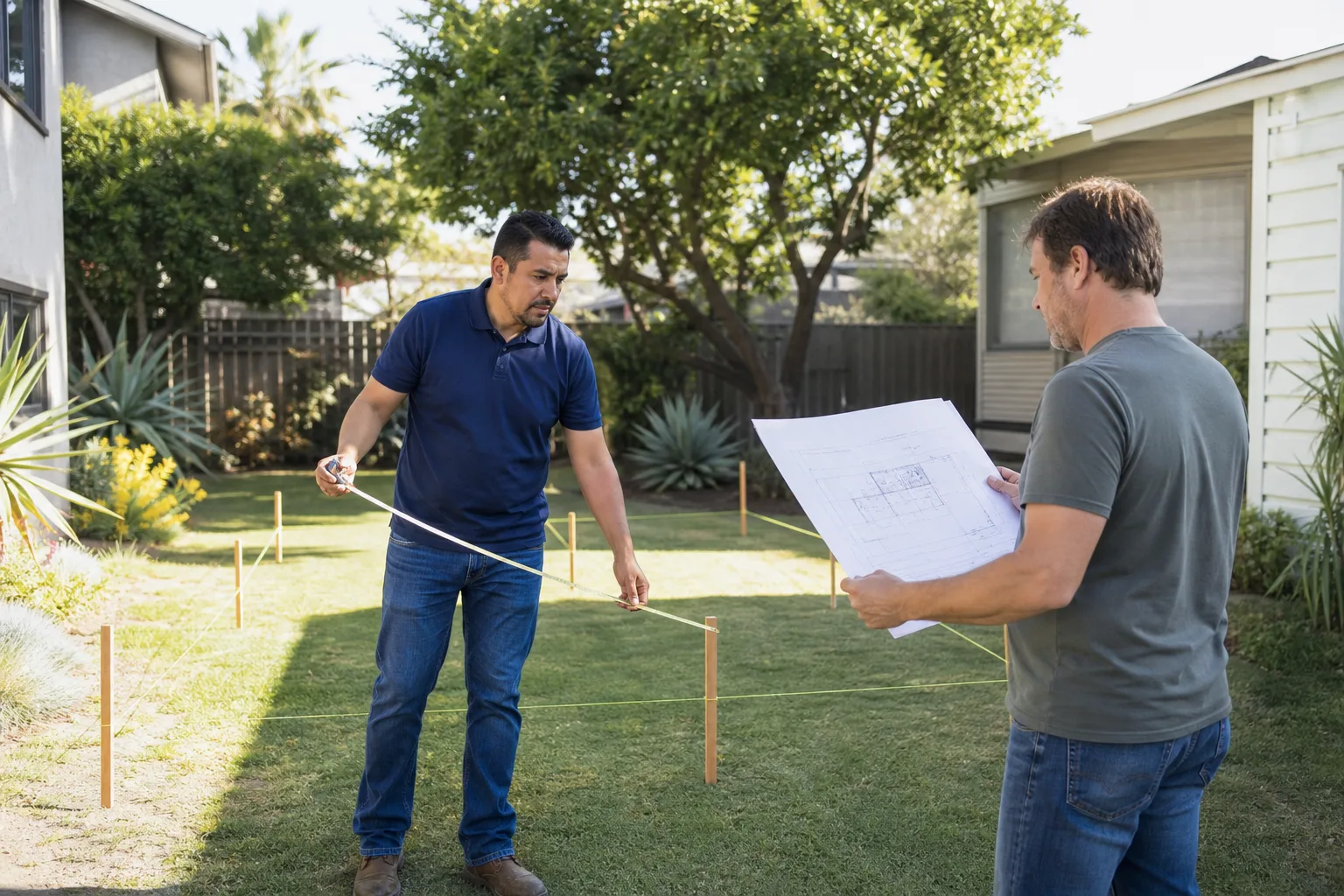
- Initial walkthrough and lot measurement. We visit the property, measure the buildable area, note topography, and photograph existing conditions. This includes locating your property corners so we’re working from real boundaries, not fence lines, which are often off by several inches.
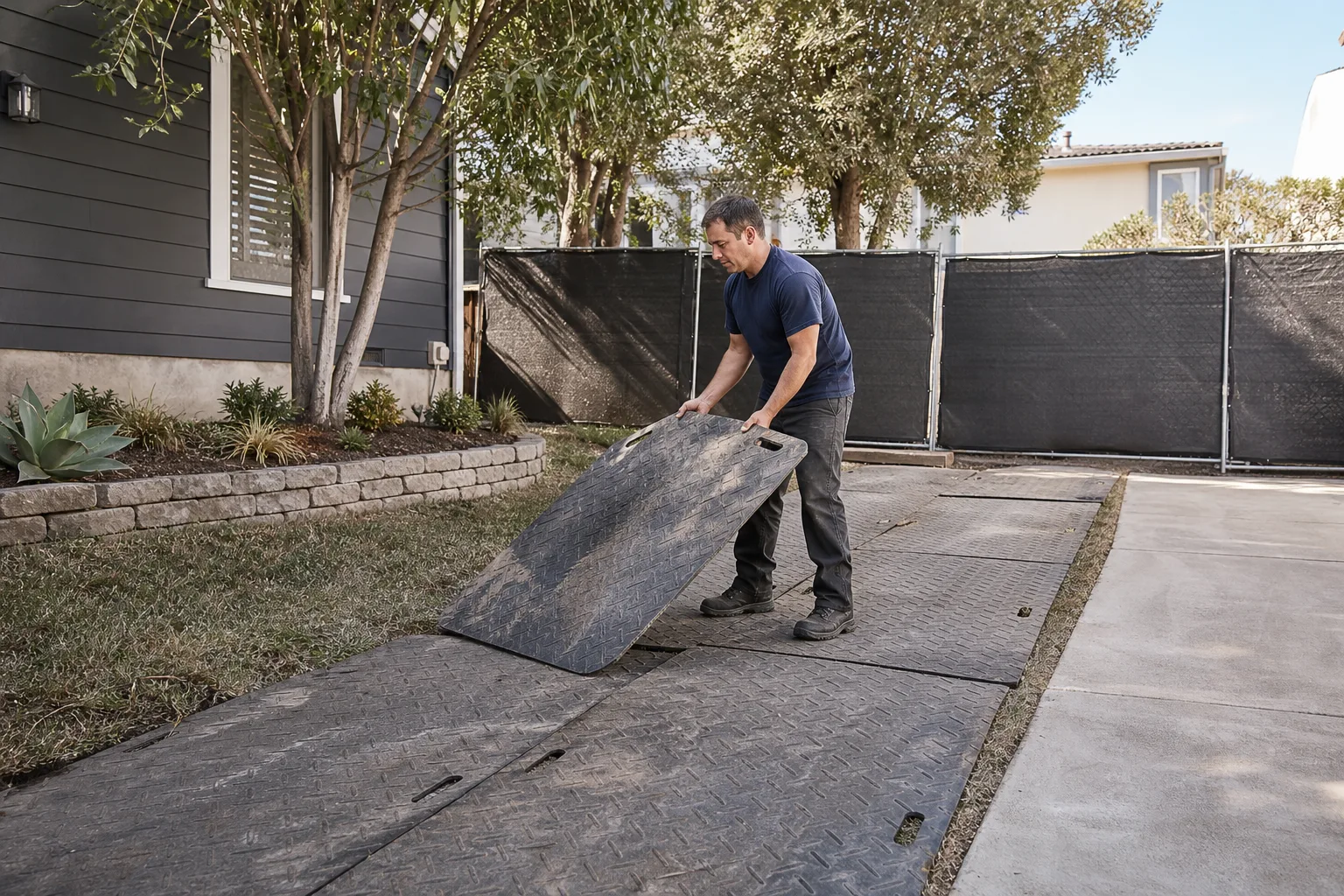
- Utility and access evaluation. We locate sewer laterals, water lines, gas service, and the electrical panel, then assess whether delivery and construction access is feasible. A narrow side yard off a busy Woodland Hills street means a very different build plan than a wide rear driveway.
- Zoning and code screening with the City of Los Angeles. We check your lot against current ADU regulations, including setbacks, height limits, lot coverage, and parking requirements. The state has preempted many local restrictions, but LA still enforces hillside and fire-zone rules that affect Woodland Hills properties in the Very High Fire Hazard Severity Zone.
- Soil and drainage review. For detached ADUs we evaluate drainage patterns and, where warranted, recommend geotechnical testing. We’re not guessing at soil bearing capacity when it drives the difference between a $40,000 foundation and a $90,000 one.
- Written site report with build recommendation. You get a document that states what can be built, what constraints exist, what variances or studies you’d need, and which build method fits your site: prefab, conventional stick-frame, or a Tuff Shed-style structure upgraded to code. This report becomes the basis for the written price you’ll receive if you move forward with design and permitting.

Site Assessment Pricing in Woodland Hills
Site assessment fees in Woodland Hills sit between $450 and $1,200 for most residential lots. Here’s the breakdown of what drives that range:
| Factor | Typical Price Impact |
|---|---|
| Flat lot, standard access, single visit | $450 – $600 |
| Sloped lot or hillside property | $650 – $900 |
| Lot with drainage concerns or retaining wall questions | $700 – $1,000 |
| Garage conversion with structural inspection | $500 – $800 |
| Large lot with complex utility locating | $800 – $1,200 |
What you’re paying for is a real, on-the-ground evaluation, not a drive-by estimate. The assessment cost is credited toward your design and permitting package if you move forward with us. And if you’re not ready for a full assessment yet, call (559) 254-0116 and we’ll talk through your property over the phone at no charge and tell you whether a full site visit is even necessary at this stage.
Some homeowners ask whether they can skip the site assessment and go straight to a building quote. You can, but the quote won’t be worth the paper it’s printed on. A Woodland Hills ADU built on expansive soil with poor drainage costs substantially more than the same unit on stable, well-draining ground. The Garrison Standard, which Fielding ADU Woodland Hills follows on every project, starts with this principle: the price goes in writing before any work starts, and that price is only as reliable as the site data behind it. You can read more about how we anchor pricing on the ADU Design & Permitting page.
Why Woodland Hills Lots Are Unique
Woodland Hills isn’t one terrain. South of Ventura Boulevard, you’re on relatively flat, alluvial ground that drains toward the Los Angeles River basin. North of the boulevard, the Santa Monica Mountains foothills start climbing, and lot conditions change block by block. We regularly see the following on assessments in this area:
- Expansive clay soil in pockets south of Mulholland and around the Woodland Hills Country Club area. Clay that swells with moisture and shrinks in drought can move a foundation, and the remedy typically means deeper footings or a post-tension slab.
- Hillside grading ordinances that apply once your lot slope exceeds a certain percentage. These rules limit how much earth you can move and how the structure must sit on the grade, which affects everything from foundation type to overall square footage.
- Fire zone building requirements for properties in the Very High Fire Hazard Severity Zone, which covers much of the hillside area south of the 101. This affects siding choices, eave construction, and sometimes even window ratings. If your assessment shows you’re in this zone, James Hardie fiber cement siding is often the right call, because it carries a noncombustible rating that vinyl and wood can’t match.
- Sewer lateral conditions on older streets where the original clay or Orangeburg pipe is still in the ground. A new ADU adds plumbing load, and if your lateral is 60 years old, the city may require replacement before you can connect.
These are not problems we hope to find. They’re conditions we verify so the number we put in writing reflects what your specific lot requires, not what a template quote assumes.
Prefab, Modular, or Conventional: What Your Site Supports
Part of a proper site assessment is matching the build method to the lot. Not every construction approach works on every Woodland Hills property, and no honest contractor will tell you otherwise.
- Prefab and modular units from companies like Abodu and Cover are designed for fast permitting and installation, but they assume a relatively level site with crane or truck access within a certain distance of the build pad. If your backyard is 50 feet behind the house with a 4-foot side yard, a prefab unit may not be deliverable without significant site work or a different model.
- Conventional stick-frame construction can follow any topography and any access condition, but it’s slower and typically more expensive on a per-square-foot basis than a well-matched prefab unit.
- Tuff Shed-style structures upgraded to residential code can work for smaller attached or detached units on flat, accessible lots, especially when the budget is tight and the use case is a home office or guest room rather than a rental unit.
Your site assessment report will name the build methods that are actually feasible on your lot and estimate the cost difference between them. That way you’re comparing real options, not brochure photos.
What Site Assessment Includes vs. What It Doesn’t
It helps to be clear on scope. A site assessment is not geotechnical engineering and it is not a full survey. Here’s the line:
What’s included
- Lot measurement and buildable area calculation
- Zoning and ADU code screening for your specific address
- Utility location review (sewer, water, gas, electric)
- Access and equipment delivery evaluation
- Topography and drainage observation
- Written report with a build recommendation
What’s not included
- Geotechnical soil boring and lab testing (we recommend it when conditions warrant, and we can arrange it)
- Formal boundary survey (your property corners are located using existing monuments and county data; a licensed surveyor is engaged if the city requires it)
- Full architectural drawings (those come after the assessment, in the design phase)
When a homeowner has already paid for a survey or a soils report, we fold that data into the assessment at no extra charge. The point is to work from the best information available, not to resell you work you’ve already done.
How the Site Assessment Feeds Your Written Price
Fielding ADU Woodland Hills operates under the Garrison Code: show up in the window, price in writing, by the book, leave it clean, stand behind it for a year. The site assessment is what makes the “price in writing” part possible.
Here’s the sequence on a typical Woodland Hills detached ADU:
- Site assessment identifies lot constraints, utility locations, access limits, and zoning realities.
- We present a written scope of work with a line-item price. That number reflects your actual site, not a benchmark average.
- You approve the price. It doesn’t move unless you change the scope.
- We move through design and permitting with the City of Los Angeles, handling plan checks, corrections, and resubmissions.
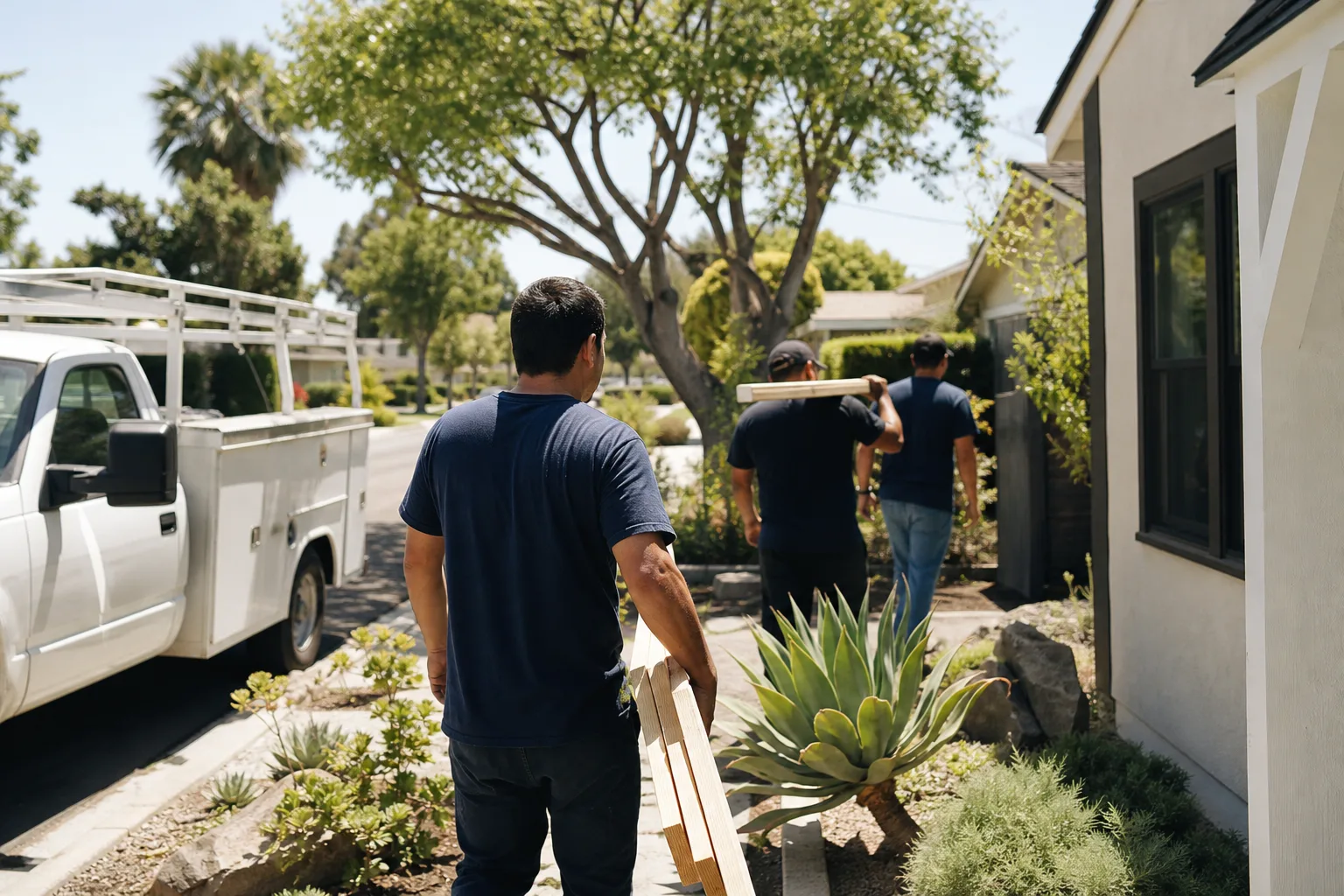
- Construction starts once the permit is issued. The crew on your property is background-checked and uniformed, and a live person answers our phones 24 hours a day, 7 days a week if you need to reach someone mid-project.
Every project we build is backed in writing for a full year under the 365-Day Done Right Promise. If something fails inside that year, we come back and make it right at no charge. That guarantee is part of the Garrison Standard, the same standard the parent organization, Garrison Partners, has been building to since 2006.
Common Site Assessment Findings in Woodland Hills
Over the years we’ve completed assessments across Woodland Hills, from the flats near Topanga and Victory to the hills above El Camino, certain issues show up repeatedly. If you live in this area, here’s what we’re watching for:
Expansive soil and foundation risk
We see clay-heavy soil throughout the valley floor south of the boulevard. The symptom is often visible on existing structures: cracked stucco, doors that stick seasonally, or concrete that’s shifted. If your house shows those signs, your ADU foundation needs to be designed for the same ground movement. In some cases this means a post-tension slab instead of a standard footing, and the price difference runs $15,000 – $35,000 on a typical 400 – 600 square foot unit.
Utility easements that squeeze buildable area
Some Woodland Hills lots carry sewer, drainage, or power easements that run along rear or side property lines. You can’t build over an easement, period. We’ve seen lots where the apparent buildable backyard was 1,400 square feet but the easement reduced it to just over 800. That kind of finding changes what size ADU you can build, and you want it known before you pay for design work.
Fire zone material requirements
Hillside areas in the Very High Fire Hazard Severity Zone trigger specific exterior material restrictions. If your assessment places you in that zone, we’ll note that James Hardie siding or stucco is required, and that prefab units from Abodu or Cover need to be specified with fire-rated assemblies. This is a code requirement, not a preference, and it’s baked into the cost from the start.
Setback nonconformity on existing structures
Many older Woodland Hills garages were built before current setback rules existed. If you’re converting that garage, the existing nonconforming placement may be grandfathered, or it may require a variance depending on the scope of work. Our assessment identifies this early so the permitting path is clear before design fees are spent.
Who Needs a Site Assessment vs. Who Can Skip It
A site assessment is required when:
- You’re building a detached ADU on any lot with slope, drainage uncertainty, or unknown utility locations.
- You’re converting a garage that predates modern building codes and has no structural documentation.
- You’re adding to an existing structure on a hillside or in a fire zone.
- You’ve received quotes that vary by more than 20% and need a clear scope baseline.
- You’re considering prefab and need to confirm delivery and foundation feasibility.
You can likely skip a formal assessment if you’re adding a small permitted interior remodel that doesn’t touch the foundation, exterior walls, or utility connections. But for anything that adds square footage or changes use, the assessment is the cheapest insurance you’ll buy on the whole project.
FAQs – Site Assessment in Woodland Hills
How much does a site assessment cost for an ADU in Woodland Hills?
A site assessment for an ADU in Woodland Hills typically costs $450 – $1,200, with flat lots on the lower end and hillside or utility-complex properties on the higher end. The fee is credited toward your design and permitting package when you move forward with Fielding ADU Woodland Hills, so the out-of-pocket cost nets to zero for most clients. Call (559) 254-0116 and we’ll give you a firm assessment price based on your address.
How long does a site assessment take in Woodland Hills?
Most site assessments in Woodland Hills are completed within 7 – 10 business days from the initial property visit to the delivery of your written report. If geotechnical testing is recommended, the overall timeline extends by two to three weeks while the lab processes soil samples. We’ll tell you the expected timeline before the assessment begins, and we meet it.
Do I need a site assessment before getting an ADU quote?
You need a site assessment before the quote means anything. Without verified lot conditions, utility locations, and zoning findings, any price you receive is an estimate built on assumptions. That’s how homeowners end up with a $250,000 quote that becomes $310,000 after the contractor “discovers” soil problems. The Garrison Standard requires the price in writing before any work starts, and we won’t put a real number on paper until the site data supports it. Call (559) 254-0116 for a free phone consultation to see if a site visit makes sense for your property.
Can you do a site assessment on a hillside property in Woodland Hills?
Yes. Hillside and canyon-adjacent properties are some of the most common assessments we perform in Woodland Hills, and they’re exactly the lots where skipping the assessment is most expensive. Slope, drainage, fire-zone rules, and access all interact, and the report will spell out what’s required for your specific grade condition. Reed Calloway has assessed hillside lots throughout the Woodland Hills foothills and will tell you straight whether your lot can support the ADU you want without any surprises.
Is a site assessment the same as a survey?
No. A site assessment includes lot measurement, zoning screening, utility location review, access evaluation, and a build recommendation, but it is not a formal boundary survey. If the City of Los Angeles requires a survey for your permit, we’ll tell you during the assessment and coordinate with a licensed surveyor. Using existing monuments and county data, we identify property corners accurately enough for most planning decisions before a survey is required.
Get a Site Assessment in Woodland Hills
If you’re planning an ADU, garage conversion, or room addition on your Woodland Hills property, the site assessment is the step that protects everything after it. It’s the difference between a price you can trust and a price that moves on you. Call (559) 254-0116 to schedule a site visit, or reach out through the home page and we’ll start with a phone conversation about your lot and your plans. Estimates are free, the assessment fee is credited if you build with us, and a live person answers the phone every time you call, day or night.
Written by Reed Calloway, Owner at Fielding ADU Woodland Hills, serving Woodland Hills.