James Hardie Site Prep & Utilities: The Woodland Hills Owner’s Guide
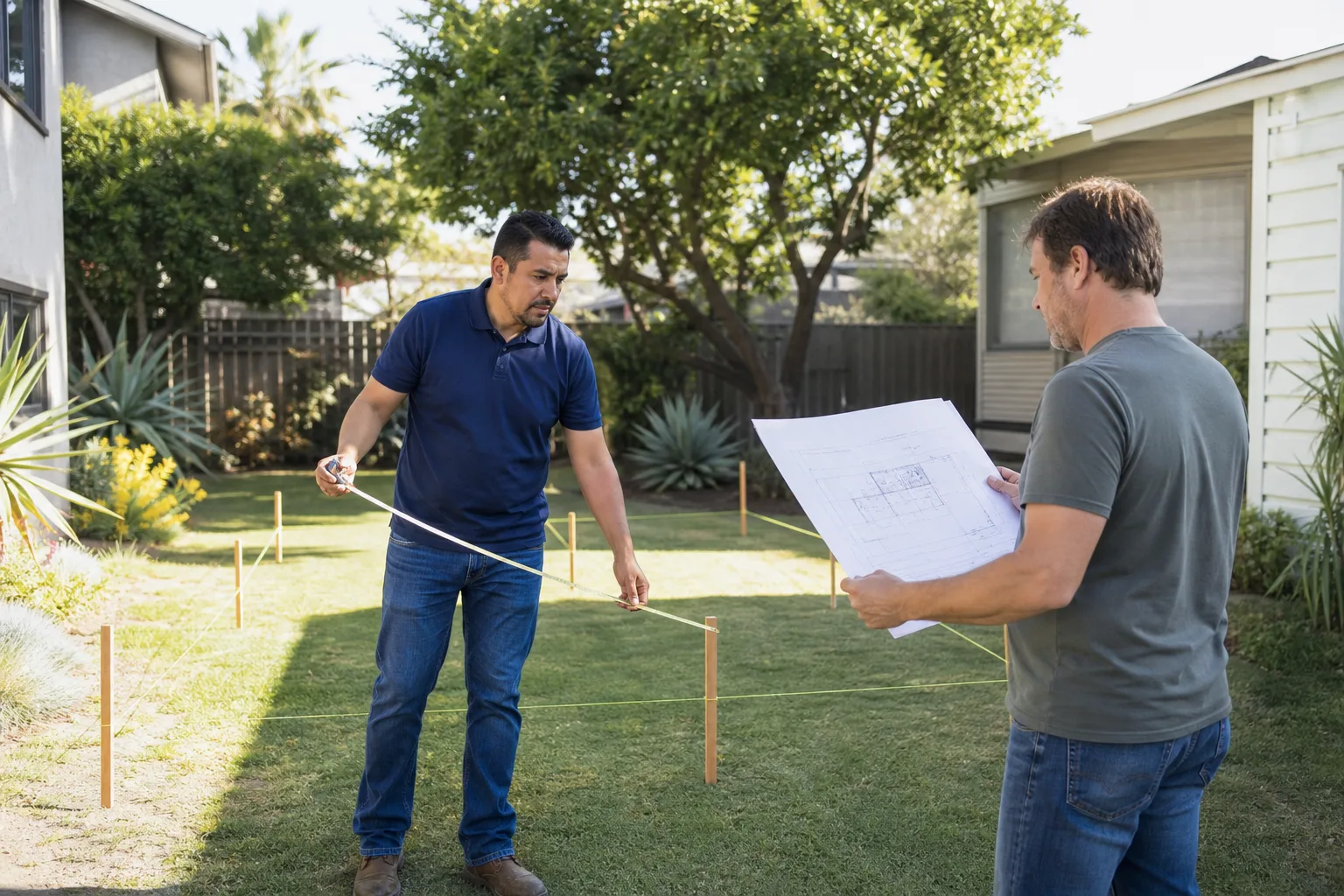
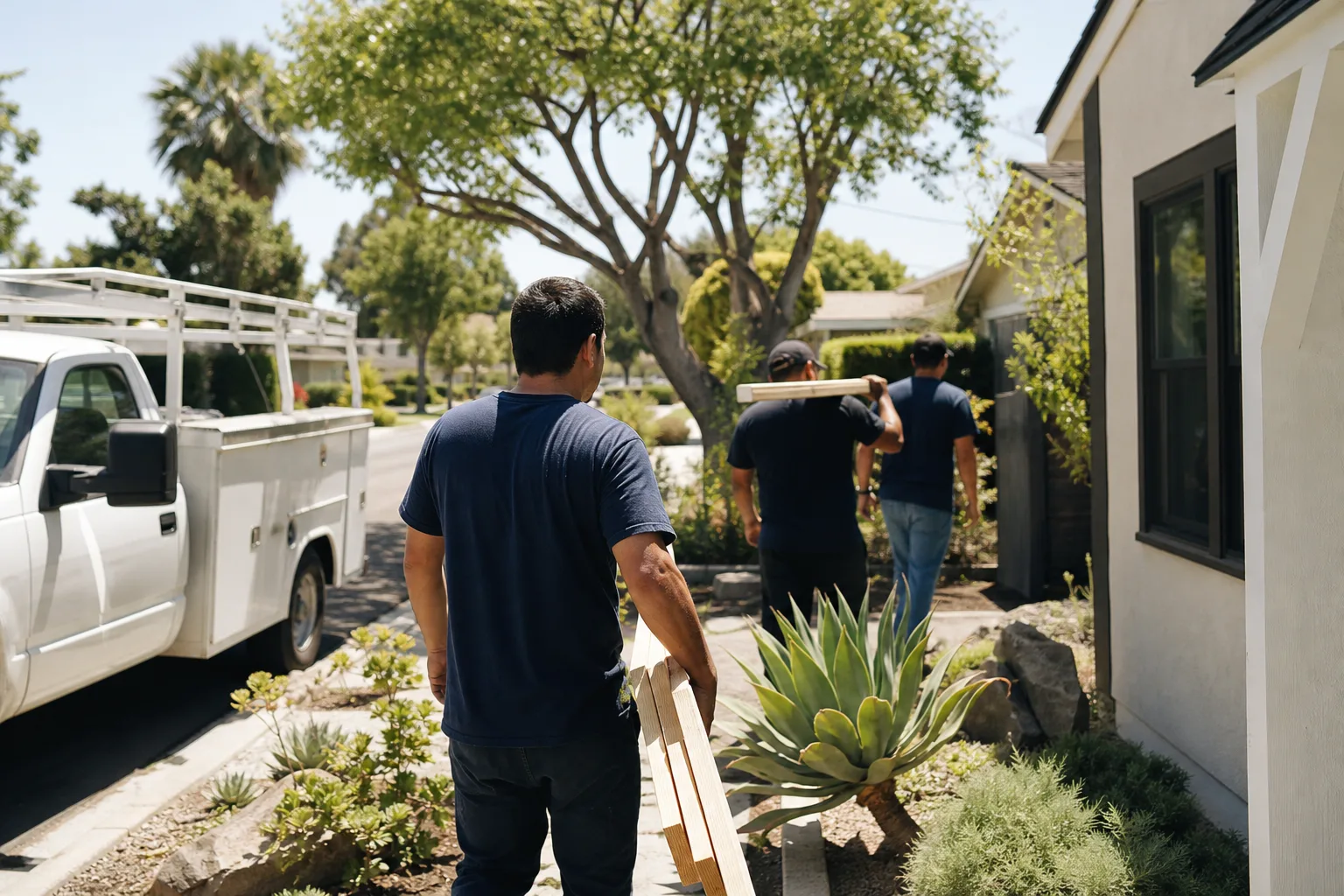
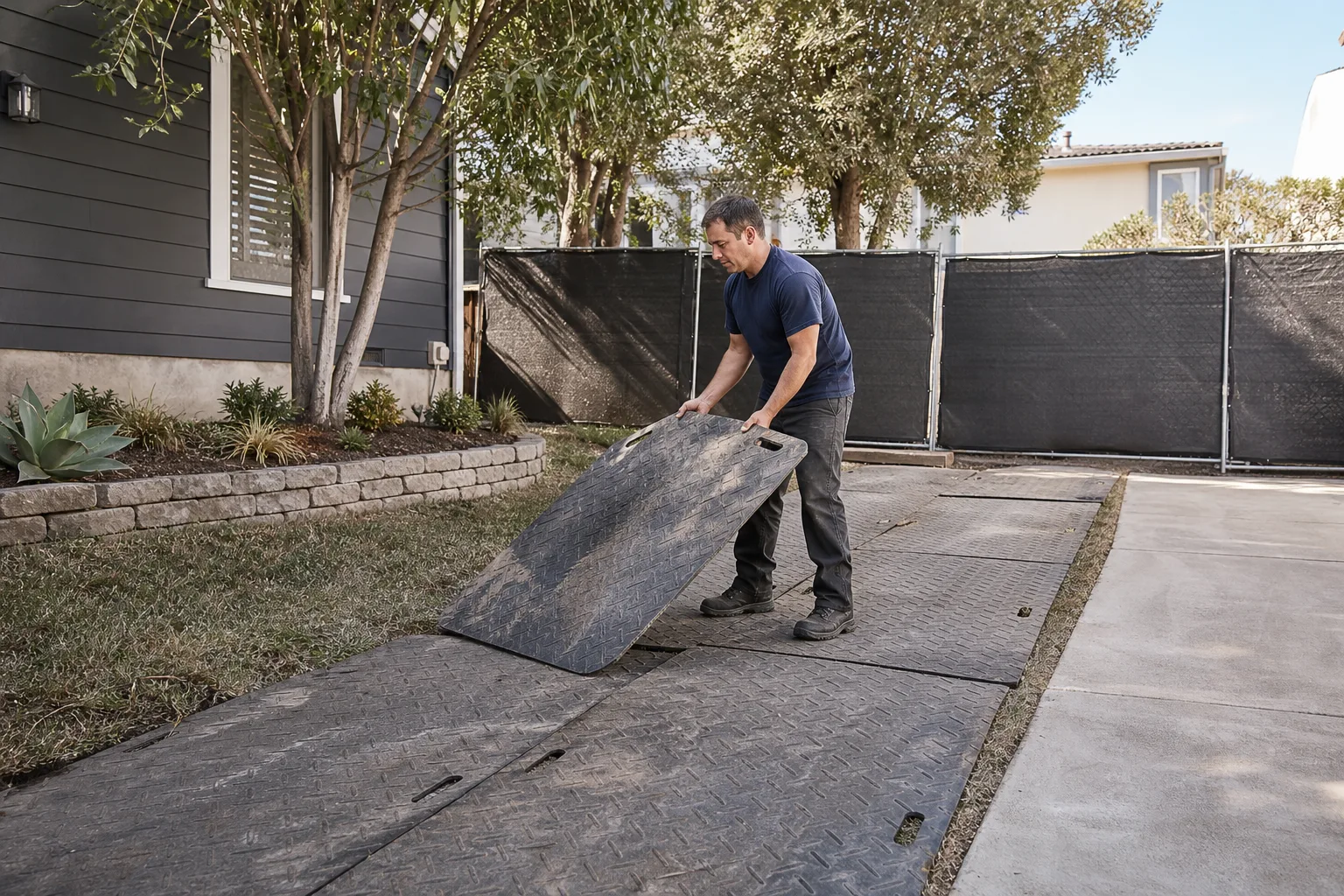
Site prep and utility rough-in for a James Hardie-clad ADU or addition in Woodland Hills typically runs $8,000 – $22,000 depending on lot conditions, trenching depth, and how far your utility tie-ins sit from the street. We stock the trenching equipment, backfill material, and site-protection gear to keep Hardie siding clean during excavation, and we schedule crews so excavation and footing work flow without a gap. Most Woodland Hills owners discover site prep problems not on paper but on the ground: a retaining wall that shifted after rain, a sewer lateral that finally collapsed, or a gas line that turned out to be three feet from where the as-built drawing said it was.
That is the moment the cheap bid evaporates. The real price of site prep is in what you find when the blade goes in. Reed Calloway has watched enough Woodland Hills lots get opened up to know the two budget killers out here: decomposed granite that looks stable until it gets wet, and utility laterals installed in the 1960s that were never recorded accurately. We price site prep with a written scope before anything moves, and we build contingency language into the quote so you are not surprised at the door.
Which James Hardie Projects This Applies To
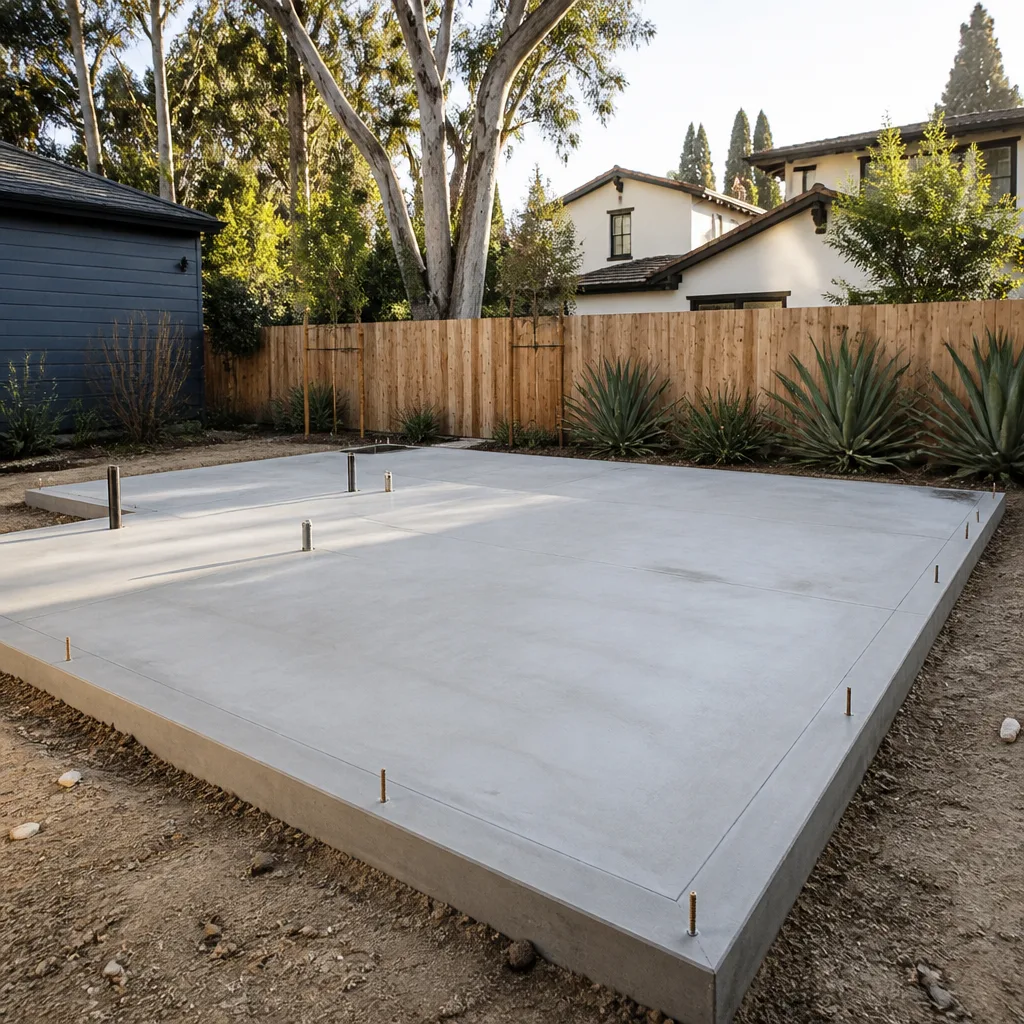
Site prep and utilities matter for any build that gets James Hardie siding: detached ADUs, garage conversions with a new foundation extension, and room additions that tie into existing sewer, water, and electrical service. Hardie plank and Hardie panel do not care about your trench line, but the building does. A Hardie-clad ADU sitting on a pad that was not properly compacted will show cracks at the siding joints within two years, and those cracks are not a siding warranty issue. They are a site prep issue.
The compatibility question is less about the siding product and more about the foundation and envelope beneath it. HardieZone HZ5 products, which is what you will buy in Woodland Hills, are rated for the hot, dry Southern California climate. But HZ5 siding only performs if the structure behind it is dry and stable. That means drainage away from the foundation, a capillary break between concrete and framing, and utility trenching that does not undermine the pad. If your existing patio slab is the planned footprint for the addition, we test compaction and slab thickness before we commit to a price. No assumptions.
For prefab platforms we install – Abodu, Cover, Dvele, Mighty Buildings, Boxabl, Plant Prefab – the site prep responsibilities are often split between the manufacturer and the local contractor. We read those contracts carefully. Some manufacturers include foundation and utility stubs in the base price; others leave all site work to the installer. You want to know which one you are signing before the crane shows up. We walk you through that scope line by line.
Signs Your Site Prep Is Failing Before You Build
- Water pooling against the existing foundation after rain. This means grade slopes toward the house, not away. On a flat Woodland Hills lot, fixing this can require a swale or area drain, which changes your site prep budget before a single Hardie board goes up.
- Cracks in the existing slab or patio that widen seasonally. Expansive soil movement is the usual cause. In the West Valley, some pockets of clay-heavy soil swell noticeably after winter rain. We see it often around Warner Center and up toward Topanga Canyon Boulevard.
- Sewer cleanout that backs up when trees leaf out in spring. Roots have likely invaded an older clay lateral. Replacing that line during site prep is far cheaper than discovering it after the ADU is framed.
- Gas meter or electrical panel located where your addition will sit. Moving a panel or meter is not a theoretical cost. It is a utility-company approval process plus an electrician’s or plumber’s scope. We flag this in the first site walk, before pricing goes in writing.
- Retaining wall leaning or showing horizontal cracks. If your planned ADU sits uphill of a failing wall, the wall has to be addressed before construction. Building permits in Woodland Hills will not close out with an unstable retaining structure on the record.
Replacement Cost & What’s Included
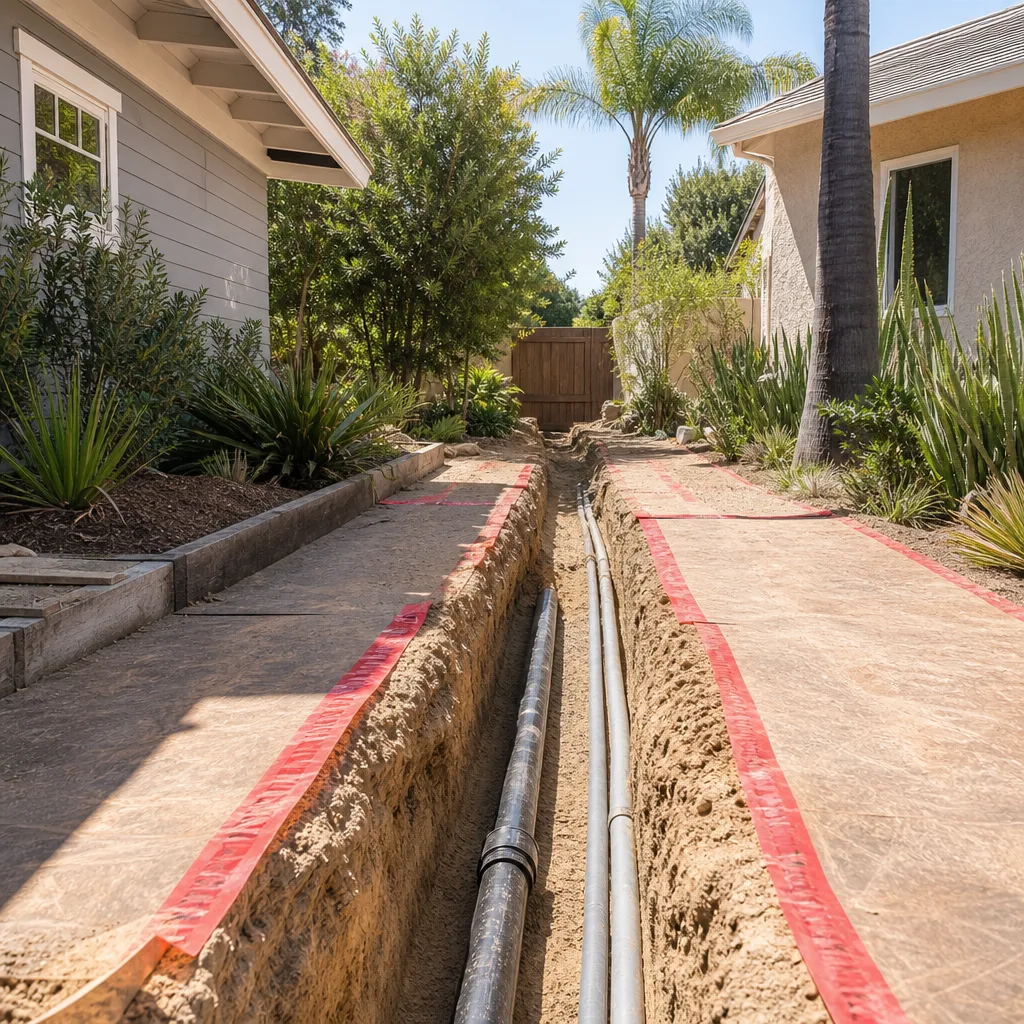
A full site prep and utility rough-in for a typical Woodland Hills backyard ADU runs $8,000 – $22,000. The range breaks down roughly like this:
- Excavation, grading, and compaction: $2,500 – $6,000 depending on access and soil type
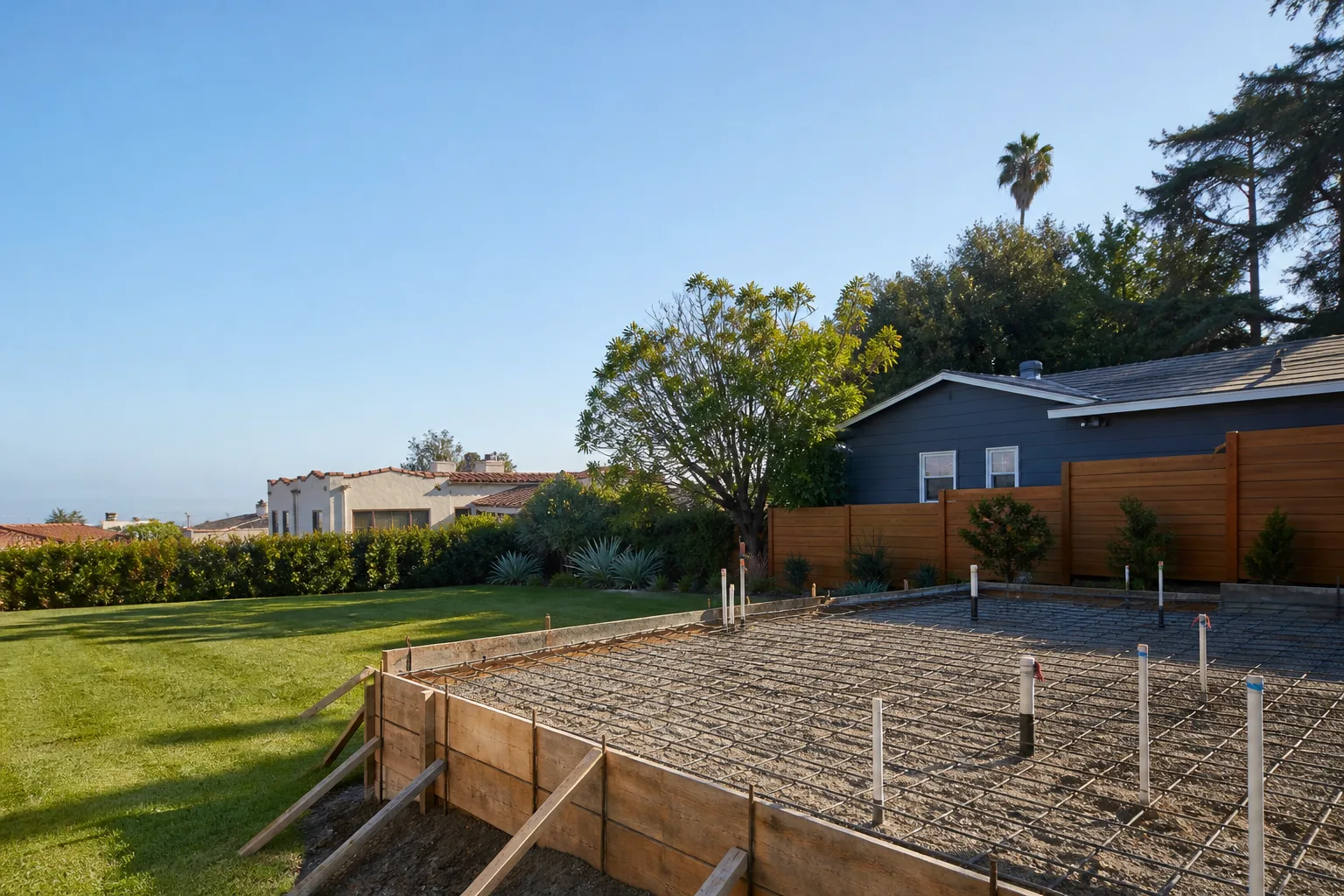
- Foundation or slab with forms and rebar: $4,000 – $9,000 for a 400 – 600 square foot footprint
- Utility trenches and lateral connections (sewer, water, electrical): $1,500 – $6,000 depending on distance to tie-in points and existing line condition
- Site protection and erosion control: $300 – $800, including silt fencing and covering for existing Hardie siding if we are working adjacent to the main house
What drives the top of the range in Woodland Hills: old clay sewer laterals that need full replacement, utility tie-ins on the far side of the property, retaining walls, and hardpan that slows trenching. We do not bury those in change orders. We show them in the written price before work starts, and if the ground reveals something no one could have predicted, we stop and bring you the number before we keep digging. The Garrison Standard covers our workmanship for a full year. If a trench settles or a drain line we installed fails inside that year, we return and correct it at no charge.
DIY or Call Us?
There is a real safety line here, and it sits right at the edge of any trench deeper than four feet. Trench collapse kills. A cubic yard of soil weighs over 2,000 pounds, and a Woodland Hills trench cut through sandy loam can cave in without warning. No homeowner should be in a trench deeper than chest height without shoring, and no homeowner should be locating and tapping a gas line on their own. Those are professional scopes, full stop.
What you can do safely: walk the lot and mark where you see drainage problems, locate your sewer cleanout, and check your electrical panel capacity so the conversation with us starts with real information. You can also call 811 to have public utilities marked for free before any digging happens on your property. That is a smart call whether we do the work or not. But the actual excavation, trenching, and utility connections? Call (559) 254-0116 and let a crew that backgrounds every member and shows up in uniform put it on the truck. Scope in writing. Price in writing. Then we build.
FAQs
Typical site prep runs two to four weeks from first stake-out to poured foundation, depending on soil conditions, utility tie-in distance, and city inspection scheduling. Woodland Hills building inspections are part of the city of Los Angeles system, and lead times for utility connections can add a week or two at the start. Call (559) 254-0116 and we will give you a schedule with real dates, not promises.
Sometimes, if the slab is thick enough, has rebar, and shows no significant cracking, but most Woodland Hills patio slabs are 3 – 4 inches of unreinforced concrete, which is not sufficient. We test thickness and condition during the site walk, and we tell you on the spot whether saving that slab will actually save you money or just move the risk downstream to your Hardie siding joints.
Yes. Every project gets permitted work done by the book, and that includes sewer, water, and electrical tie-in inspections. We pull the permits, schedule the inspections, and you get a written price that includes those line items before work starts. No permit board left blank on our jobs.
We cover adjacent siding with site protection before excavation starts, and if our equipment damages your Hardie boards, we replace them at no charge. That is part of the written guarantee we hand you before work begins. You will know exactly what is covered and for how long, because it is on paper, not in a handshake.
Written by Reed Calloway, Owner, Fielding ADU Woodland Hills at Fielding ADU Woodland Hills, serving Woodland Hills and nearby areas.